CAR T-cell offering new hope to cancer patients
11 March 2025
A new facility being built in Christchurch will see CAR T-cell therapies manufactured in Christchurch for the first time. The therapy is changing the cancer landscape by using the patients’ own immune systems to fight the disease.
The Cancer Society Southern’s recently appointed mid-Canterbury and Selwyn community coordinator, Elyse Guise, says, as someone whose family has travelled overseas for the therapy, she couldn’t be happier with the move.
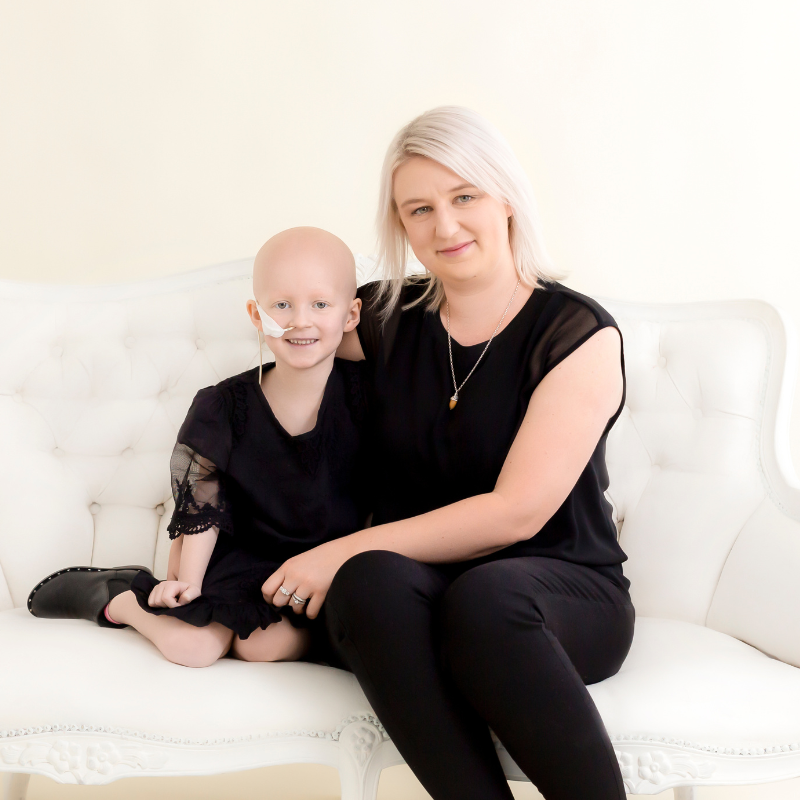
Elyse’s daughter, Nora, was child number two in a phase one trial for CAR T-cell therapy targeting liver cancer in children. The trial was held in Houston, Texas, in 2019 and the need to travel was one extra stress for an already stretched family.
As a five-year-old, Nora was diagnosed with a particular type of cancer which Elyse describes as a mix of child and adult liver cancer.
She had undergone the normal protocols of chemotherapy and surgeries twice, but the cancer metastasized to her lungs and even after more mop-up chemotherapy, it kept returning. A new protocol was trialed on the little girl in an effort to improve her outcomes and then a switch made to an inhibitor drug, but the cancer was stubborn.
“The inhibitor was almost like immunotherapy but in a pill form, but neither it nor the new protocol worked so she was placed in the palliative care team,” Elyse said.
“The CAR T-cell was presented to us when our oncologist went looking for what else was out there. We investigated and we wanted to give Nora every chance. She was patient number two of a phase one trial. When we signed up, I don’t think patient number one had even been treated yet.”
Elyse said they flew to Houston in October 2019. Nora’s blood was taken soon after arrival and sent to have the therapy manufactured. The therapy works by enhancing the T-cells ability to find and kill cancer cells. Each therapy needs to be targeted to the type of cancer.
“They took quite a lot of it (blood). It made Nora a little woozy, so they did it over two days.
“We flew back home six weeks later. We were at the hospital for five weeks. They gave her some mild chemotherapy for three days after (the therapy) just to knock the white blood cells out, and we had to stay there for follows-ups for the next three weeks.
“Liver cancer puts out a protein, AFP, and it helps them figure out whether the cancer is dying or growing. When we went there, Nora’s was in the mid-2000s, and they checked it again before we left, and it had gone down. It had dropped, I want to say to the 800s. It (the therapy) had definitely done something.”
Once they got home Elyse had to do blood draws, and then it was a race across town to get it into the FedEx fridges within a certain time frame. The blood was then FedExed to Houston where an AFP draw was done. Sadly, it showed the levels had gone back up.
“That’s when we knew it hadn’t worked.”
Just two weeks later, just short of her seventh birthday, Nora passed away.
Elyse said some kids probably wouldn’t have managed all the treatments, but Nora just did.
“She was a star, an absolute star. She put up with so much and when we had to tell her again that we’re going to do something else, she said that’s fine. She was absolutely brilliant.
“She had very old soul qualities.”
Elyse said when the option of the trial had come up, they were just about resigned to the fact Nora was nearing the end, and they were going to focus on spending time together and hoped they had as long as possible.
“And then we were dangled a carrot, almost like she’s going to live, and I would love to say I thought the entire time it was going to work. We were definitely hopeful, but it was a phase one trial and a limited dose. I felt a lot safer with it being a limited dose because people can go into shock. I didn’t want that to happen when you’re literally half a world away. At the same time, I absolutely wanted it to work.”
“I look back and think if we’d stay here, she’d be at school and carrying on with normal life. But over there it was just me and her mostly. I got to spend so much time with her. That was so precious.”
Elyse said it would be amazing if they could manufacture the therapies here because it’s so hard to go through it all so far away from home and home country.
“And you have to find the money. That’s (the amount) ridiculous. I had to do things I thought I’d never do to get money.
“Not in terms of illegal or anything,” she added with a laugh. “But I had to go there’s this absolutely horrible story about my child, please take it in and spread it around. We didn’t consider safety or anything.
“We just needed the money so desperately. So, I said yes to absolutely everything,
“If families had the opportunity to not have to find that money because the treatments done here not overseas, that would be incredible.
“Especially when it’s a last-ditch hope, being able to do it in your own country would be such a big financial and emotional thing.”
Elyse said it was already stressful and having to find that much money, well she didn’t sleep a lot during the six weeks of trying to find $200K.
“It was horrible. The US system is insane. I still shake my head at the amount of money we spent and what it was for.
“$200K didn’t even include manufacturing the T-cells. We only paid for the chemo and time in hospital because the therapy was part of the trial.
“I have no regrets. We tried everything including crossing the world. While it’s horrific and it’s a horrible thing to have to do, I’m also so grateful that we did it. I can’t say oh maybe if we’d gone then she’d still be here. Like, I know we did absolutely everything.
Elyse said Nora’s cancer was a solid tumour and CAR T-cell therapy for solid tumours has not proven as successful so far as for blood and other cancers. Although, the field is advancing.
What is CAR T-cell therapy? It is a therapy which uses the body’s own immune system to fight cancer. Doctors take some of your T cells (a type of white blood cell) from your blood and modify them in a lab, adding a special gene to help them recognize and attack cancer cells. The modified T cells are grown in large numbers and the supercharged cells are put back into your bloodstream. Once in your body, they find and destroy cancer cells.
The new CAR T-cell therapy manufacturing facility in Christchurch is being opened by BioOra, a collaboration between the Malaghan Institute and Bridge West.
Managing Director John Robson said the focus for the Christchurch facility is on non-Hodgkins’s lymphoma which he believes can be produced at a fraction of the cost of other countries.
John is so confident in the product and their business pathway that he’s leading the construction of the new cell therapy manufacturing facility in Christchurch.
The build is expected to start in Q2 this year, (2025) with completion scheduled for March 2026. After that comes a three-to-five-month period for commissioning of the labs and obtaining a MedSafe license to become fully operational. They have a target date of between June and August 2026 to open.
John believes this will soon become a campus for similar ventures.
John said in the first year, 400 doses would be manufactured, more than enough to provide a treatment for all New Zealanders who needed it.
Donate NOW